Up-to 40 Free Pills When you pay with Bitcoin
Up-to 40 Free Pills When you pay with Bitcoin

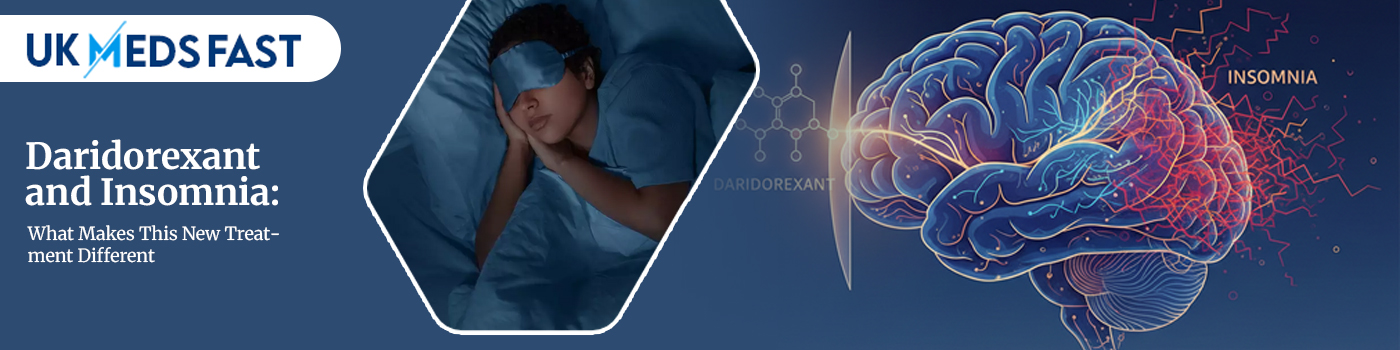
Daridorexant is one of the recent drugs approved for insomnia treatment. This novel agent is not merely a different version of the old sleeping pills to which many people are accustomed. It interacts with a totally different brain pathway, and that is one of the main reasons it is considered a newer treatment option in sleep medicine.
If you got a prescription for daridorexant or are considering whether it can be beneficial, it is good to know how it operates, for whom it is the right drug, and what it can realistically provide.
Most of the older sleep medications, like benzodiazepines or z-drugs such as zopiclone, act by pushing the brain into a slow and sedated state. They elevate the levels of soothing chemicals in the brain so that you feel sleepy and eventually go to sleep.
Daridorexant chose another method. It doesn't forcibly induce sedation; it rather diminishes wakefulness. It does this by targeting a pathway in the brain that usually makes you alert.
One such pathway is mediated by the neurotransmitter orexin. Orexin is one of the principal messengers that keeps your brain awake and active. Throughout the day, orexin is very active. At night, it gradually lowers in activity as the body gets ready for sleep.
Daridorexant interrupts the communication from orexin. The brain, with the activation of the wake-holding system diminished, is now able to transition into sleep more smoothly without the need for artificial sedation.
Daridorexant is a member of a class of drugs referred to as dual orexin receptor antagonists, or DORAs. Very few drugs belong to this class, and at present, daridorexant is the only drug from this class that has been approved for use in the UK and most parts of Europe.
DORAs are supposed to be advantageous for sleep as they target wakefulness rather than promoting sedation. This means that it would interfere less frequently with the sleep pattern regarded as normal: light sleep, deep sleep, and REM sleep in successive intervals through the night.
When prescribed, the dose and timing of daridorexant are determined by a clinician based on individual health factors, response to treatment, and safety considerations. It is recommended that you only take it when you have enough time left in the night to sleep, usually at least seven hours. This helps reduce the chance of feeling groggy the next morning.
In the UK, daridorexant is approved for use in adults who suffer from chronic insomnia that has a major impact on their daily activities. In these cases, the healthcare provider must make the decision to prescribe it after taking into account the guideline recommendations of the country, and the first-line treatments like psychological therapy for insomnia, commonly referred to as CBT-i, have failed or been unsuitable for the patient.
The drug has been tested in younger and older populations, but caution should be exercised, especially in those above the age of 75. Its use during pregnancy or lactation is also not well-documented. As a result of its ability to decrease wakefulness, daridorexant is not commonly used in patients with narcolepsy, as it might worsen the problem of daytime sleepiness, which is already present.
Studies on the use of daridorexant in patients with sleep apnea indicated that the drug did not aggravate the condition. Nevertheless, although apnoea could not be completely eliminated, sleep quality might be improved to a certain extent when the patient is also treated properly for the breathing disorder.
Daridorexant is commonly well-tolerated. It is important to note that initiated treatment may result in encountering dizziness, somnolence, and headache symptoms. Occasionally, dreamlike experiences, nightmares, and episodes of sleep paralysis might occur. If the above adverse effects were to put a question mark on your functional life, then you have to explore other useful variables that contribute to the protracted treatment plan.
Daytime sleepiness may occur, particularly during the first few days of treatment. If drowsiness continues or affects daily functioning, medical advice should be sought.
Drinking alcohol increases feelings of tiredness and may add to the effects of daridorexant on nervous system depression.
Because daridorexant reduces wakefulness, some individuals may feel really unwary on the use of the tablet the next day. It has been reported that this effect lasts more consistently for the first few days and then gradually decreases with the application of therapy. Therefore, pay attention before driving or working on anything that requires acute attention, depending on how you actually feel about it.
Daridorexant holds the advantage of having no reported tolerance or rebound on chronic use, characteristics usually associated with other sleep medications. Ongoing studies have not shown any indication of needing higher doses or struggling to discontinue the medication beyond a year. Besides, not many signs of any rebound insomnia when discontinued. In most cases, the sleep doesn't deteriorate significantly after ringing the bell on these drugs.
Daridorexant works through a different biological pathway to manage insomnia. For numerous individuals, it can become simpler to sleep and be in a sleeping state without completely numbing the brain's activity. It may be considered in selected patients under medical supervision when used under the doctor's instruction for patients who have been unsuccessful with other treatment options.
It is good practice to use sleep medications in conjunction with developing healthy sleeping habits and, if possible, engaging in therapy that helps you deal with the root causes of insomnia. When used in this manner, daridorexant can be integrated into a balanced approach that promotes good nights and, hence, more alert and active days.
1- National Institute for Health and Care Excellence (NICE), 2023.Daridorexant (Quviviq) for treating long-term insomnia: Technology Appraisal Guidance TA922. NICE, London. Available at: https://www.nice.org.uk/guidance/ta922
2- National Institute for Health and Care Excellence (NICE), 2023.Insomnia: Daridorexant Prescribing Information. NICE Clinical Knowledge Summary. Available at: https://cks.nice.org.uk/topics/insomnia/prescribing-information/daridorexant/
3- Scottish Medicines Consortium (SMC), 2024.Daridorexant (Quviviq®) - Full SMC Advice for Insomnia. SMC, Scotland. Available at: https://www.scottishmedicines.org.uk/medicines-advice/daridorexant-quviviq-full-smc2611/
4- Derbyshire Medicines Management NHS Guidelines, 2025.Daridorexant Prescribing Guidance for Long-Term Insomnia. Derbyshire NHS. Available at: https://www.derbyshiremedicinesmanagement.nhs.uk/assets/Clinical_Guidelines/Formulary_by_BNF_chapter_prescribing_guidelines/BNF_chapter_4/Insomnia_Daridorexant_prescribing_guideline.pdf
5- Somerset NHS Formulary, 2025.Daridorexant (Quviviq®) for insomnia in adults (in line with NICE TA922). NHS Somerset Formulary. Available at: https://www.somersetformulary.nhs.uk/chaptersSubDetails.asp?FormularySectionID=4&SubSectionID=K100&SubSectionRef=04.01.01
This article is for educational purposes only and does not replace professional medical advice, diagnosis, or treatment. Daridorexant is a prescription medication and should only be used under the guidance of a qualified healthcare professional. Always consult your doctor before starting, stopping, or changing any treatment for insomnia.